



About Venue

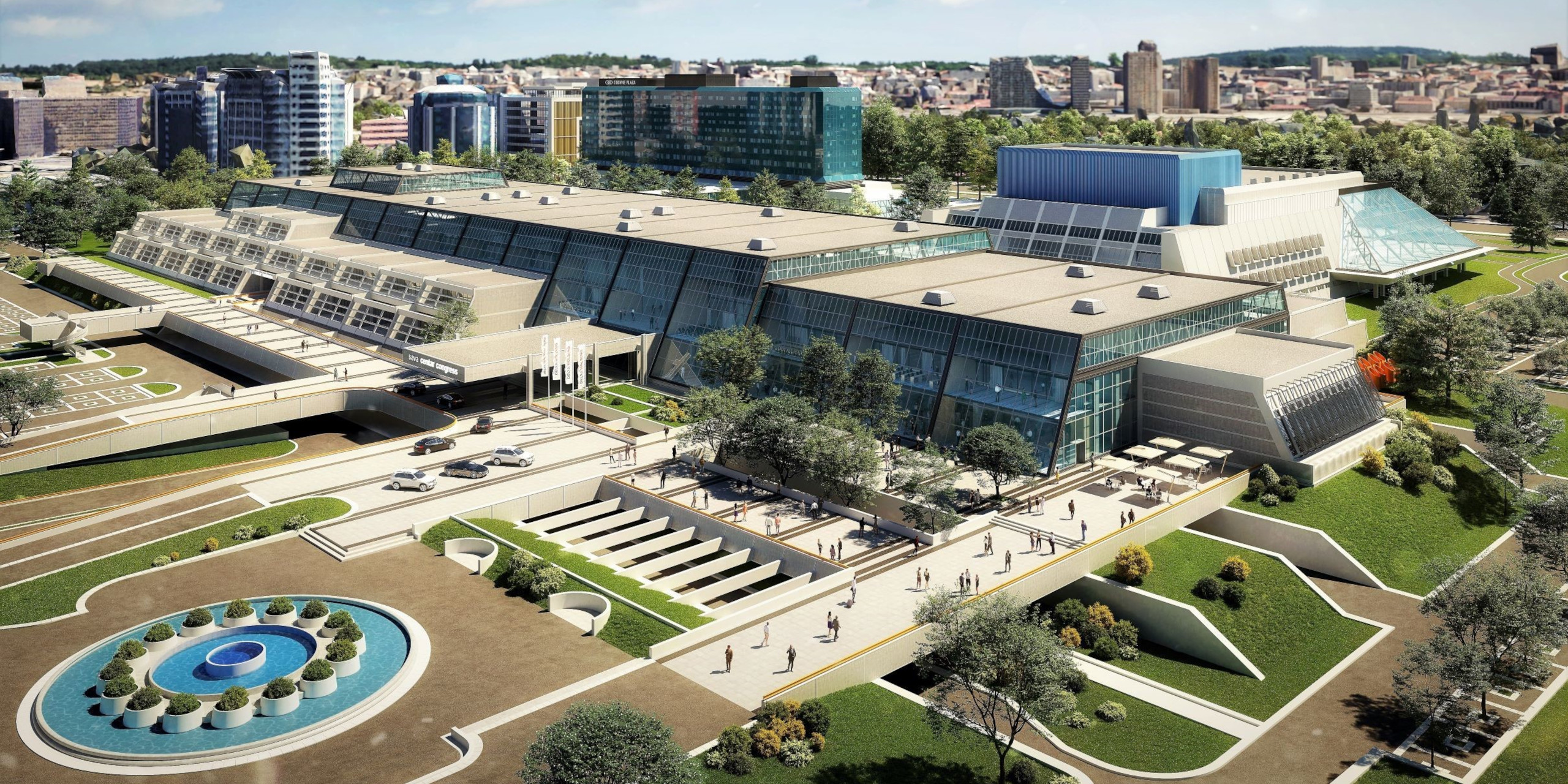
The Ljubljana Exhibition and Convention Centre, where the EERVC is held this year, for the second time in three years, is historically partly connected to the Slovenian veterinary profession. On the site of the round pavilion (Jurček or mushroom Boletus), stood a small gothic church of St. Cristopher, which was demolished in 1708 and replaced by a new church in the Baroque style. In 1779, the Emperor Joseph II. prohibited burials around churches in Ljubljana and ordered that the city cemetery be located next to the church of St. Christopher. Burials there took place until 1906, when a new cemetery (Žale) was opened, approx. two kilometres to the northwest. Until 1926, burials in crypts were still permitted and during the period when both cemeteries were active, many graves were transferred from the old cemetery to the new one. However, many remained in their original places. In the 1930’s, the Slovenian architect Jože Plečnik significantly changed the visual appearance of the abandoned cemetery. In 1934, next to the old church of St. Christopher, a new church, dedicated to Cyril and Method was erected, built in the typical Plečnik style. Two years later, construction began on the round, four-story building of the Academic College or Baraga Seminary but, due to some changes in the execution, Plečnik renounced his authorship. The building has not been finished until today.
In 1937 and 1938, the memorial park Navje (the dwelling of dead ancestors) with gravestones of distinguished persons from Slovenian history was finished, according to Plečnik’s, and two other co-workers, plans. Here we find a tombstone of Janez Bleiweis, a human and veterinary doctor, deserved for the development of the veterinary profession in the 19th century in Slovenia. The most outstanding feature is the arcadian hall, which was part of the old cemetery.
After the end of WW2, a Military Veterinary Hospital was organised on the empty site of the former cemetery and some of the low buildings were erected. Due to the shortage of military veterinarians, a Military Education Centre for the education of army veterinary technicians began operating in 1947. The Yugoslav Army had a great number of horses in cavalry and transport, depots for exhausted animals and military farms for cattle and pigs. In addition, infectious diseases which had spread during the war still threatened. The 1st generation studied for two years, the 2nd for three and the 3rd (the last one) for four years. In 1951, the Centre was reorganised into the School for Active Veterinary Officers, and in 1956, it moved to Sarajevo as the School for Reserve Veterinary Officers.
In 1954, the Ljubljana Fair, established after WW1 and located in Tivoli Park, changed the name into the Economic Exhibition Centre and moved to the location where it still stands today. The following year, the first Slovene livestock exhibition was organized, which was attended by important experts in the veterinary profession. In 1957, both churches were demolished so as not to disturb the Yugoslav Communist Congress, held in Ljubljana the following year. On the site of both churches, the round pavilion and obelisk were erected. The dome was built in 1958. In 1976, the Yugoslav Veterinary Congress was held there.
The EERVC Congress was held for the first time at the Ljubljana Exhibition and Convention Centre in 2022.
Prof. Dr. Vojteh Cestnik